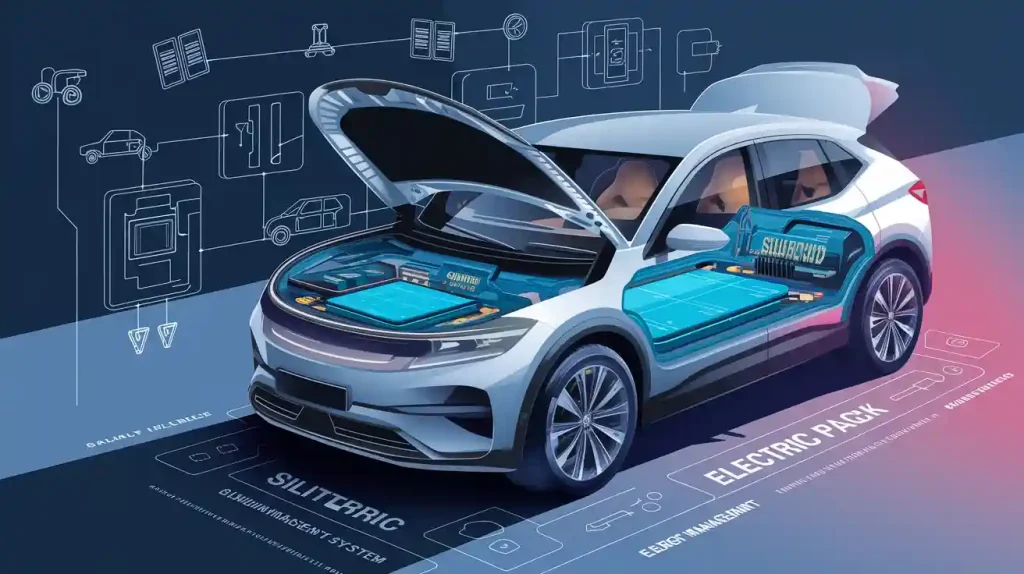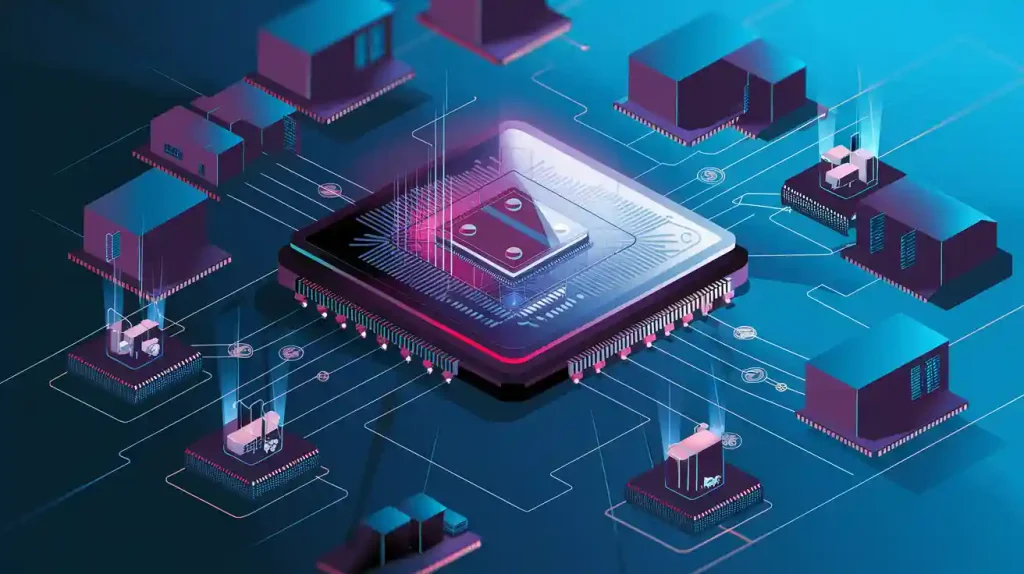
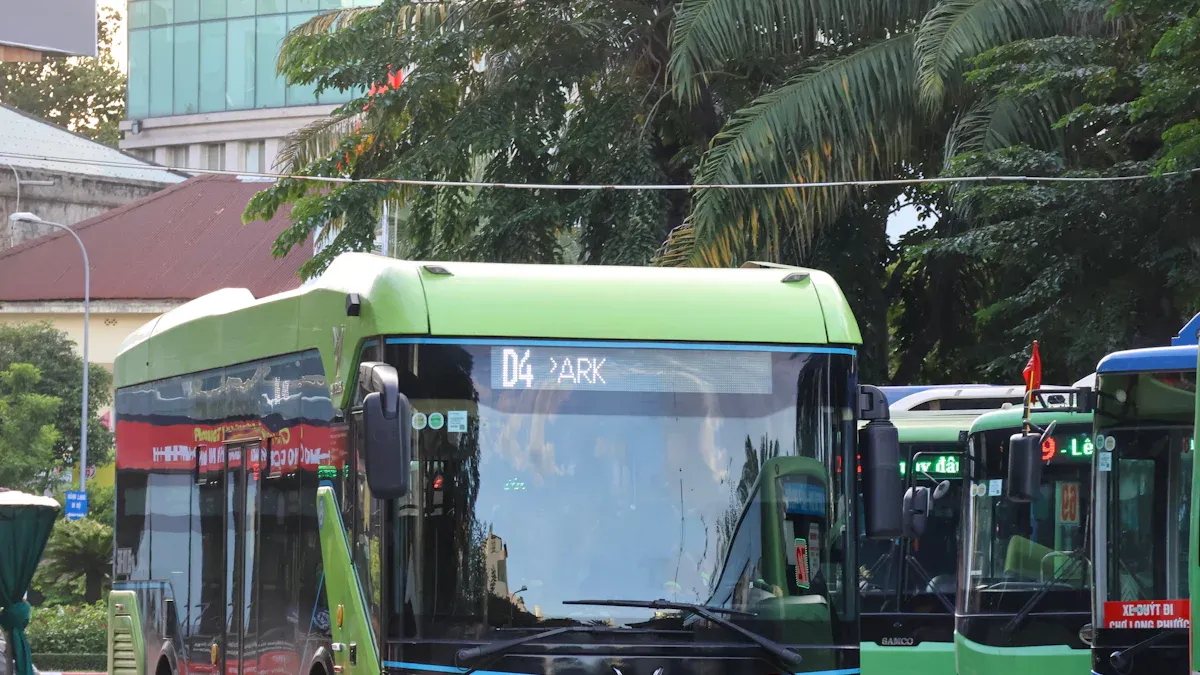
Smart transportation uses new tech. It makes travel safer. It makes travel faster. It makes travel greener. V2X Components are key to this. They help things talk to each other. Vehicles share info with their surroundings. This shows how smart transport works. It is very important for today’s travel. The smart transport market is growing fast. The table below shows this growth:
Metric | Value |
|---|---|
Global Market Size (2025) | USD 151.74 billion |
Global Market Size (2034) | USD 457.30 billion |
Global CAGR (2025-2034) | 13.04% |
This growth means new ideas are important. You can find more at https://icdeir.com/blog/.
Key Takeaways
V2X communication lets vehicles talk to other vehicles, road parts, and people. This makes travel safer and faster.
On-Board Units (OBUs) are in cars and send out car data. Roadside Units (RSUs) are on roads and help cars connect to a bigger network.
V2X technology makes roads much safer by giving warnings about dangers. It helps avoid crashes and keeps people safe.
V2X helps traffic move better and reduces jams. This also means cars use less gas and create less pollution.
V2X is important for self-driving cars. It gives them more information to make better and safer choices.
Understanding V2X in Smart Transportation
What is V2X Communication
V2X means Vehicle-to-Everything. It is a system. Vehicles talk to many things. This talk is key for smart transportation. Vehicles share info fast. This is more than a driver sees. V2X helps smart transport work. It makes roads safer. It makes them work better.
Many ways to talk make V2X happen. These include:
Dedicated Short-Range Communication (DSRC)
Cellular V2X (C-V2X)
Global satellite navigation (GPS/GNSS)
2.4/5 GHz wireless communication for in-vehicle networking
Sub-1 GHz protocols for long-range communication, like LoRaWAN or ZigBee
These are the main parts of V2X talk. They let different V2X Components work together.
Key V2X Communication Modes
V2X talks in different ways. These ways help vehicles connect. They connect to their surroundings. They build a full picture of roads.
Device-to-network (V2N): This uses regular cell service. Vehicles get cloud services. This gives traffic updates. It also helps with remote checks.
Device-to-device: This talks directly. It does not need a main network. This direct link helps with many uses:
Vehicle-to-Vehicle (V2V): Cars talk to other cars. They share speed. They share direction. They share braking info. This stops crashes.
Vehicle-to-Infrastructure (V2I): Vehicles talk to road items. This means traffic lights. It means road signs. This helps control traffic.
Vehicle-to-Pedestrian (V2P): Vehicles warn drivers. They warn about people walking. They warn about bikers. This keeps people safe. It also helps with toll collection.
These modes work as a team. They make a connected system. It is aware of everything.
Key V2X Components: Building Blocks
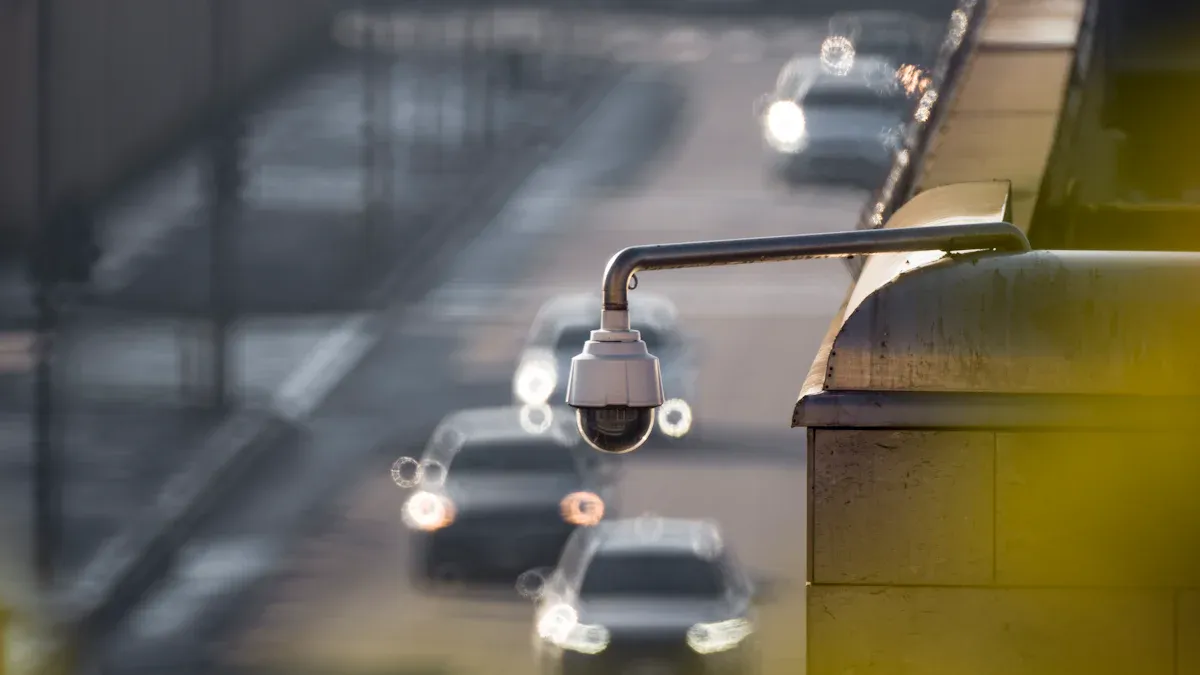
Smart transportation needs special parts. These are hardware and software. They work together. They make a connected world. These V2X Components are very important. They let vehicles talk. They let infrastructure talk too.
On-Board Units (OBUs)
On-Board Units are OBUs. They are devices. They go inside vehicles. They are like the car’s talk center. OBUs let a car talk to other cars. They also talk to roadside gear. These units gather car data. This data includes speed. It includes location and direction. OBUs then send this out. They also get data from others. This constant sharing helps drivers. It helps automated systems too. For example, an OBU can warn a driver. It warns about a sudden stop ahead. It gets this from another car’s OBU.
Roadside Units (RSUs)
Roadside Units are RSUs. They are different. They are not in cars. RSUs are part of the road. Workers put them along roads. They are at crossings. They are on highways. RSUs are like towers for cars. They link cars to the bigger network. They also pass info. This is between cars and traffic centers. For instance, an RSU can tell a car. It tells about a traffic jam ahead. It can also change traffic lights. This is based on car flow. Good placement of RSUs is key. It gives good coverage. It gives reliable talk. Researchers study RSU placement. They want the best results.
Strategy | Methodology | Goal | Benefits | Limitations |
|---|---|---|---|---|
Greedy Set-Coverage | Uses car traffic data. It picks crossings. It is like a Set Covering Problem. | Use fewer RSUs. Keep good service. Connect the network better. Reduce network breaks. | Looks at traffic. Looks at data quality. This is in multi-hop situations. | Sometimes not better than even placement. Finds minimum crossings. Not perfect spots. |
Probabilistic Maximum Coverage | Uses some info. This is about how cars move. It is like a probabilistic maximum coverage problem. | Cover the most cars. Each with at least one RSU. Find spots. Cars are most likely to contact an RSU. | Placing RSUs based on some movement info. It works better. Better than using all movement info. | Does not promise to cover all areas. Does not say how many RSUs are needed. This is for full coverage. |
Genetic Algorithm (Moura et al.) | Sees the road network as a graph. Uses a genetic algorithm. It solves a maximum coverage problem. It has a time limit. | Make coverage better. Make connections better. | Much better coverage. Better connections. Better than a simple greedy method. | Does not include install cost. No accident data. No city obstacles. |
Genetic Intersection-Coverage Algorithm (GICA) | Sets up RSU placement. It is a problem with many goals. It focuses on important junctions. | Cover more area with RSUs. Lower signal problems. Lower RSU cost. | Works better than a greedy plan. | Does not look at average connection quality. No changes in budget for setup. |
DSRC vs. C-V2X Technologies
Two main technologies help V2X communication. These are Dedicated Short-Range Communication (DSRC). The other is Cellular V2X (C-V2X). Both let cars talk. But they work differently.
DSRC uses a special radio frequency. It is like Wi-Fi. But it is for cars. DSRC makes a direct link. This is between devices. It does not need cell service. This makes it very fast. It is for short distances. It is good for urgent safety messages. For example, it can warn. It warns about a car running a red light nearby.
C-V2X uses cell networks. It uses the same tech as phones. C-V2X can talk directly. This is between devices. It can also use the cell network. This is for longer distances. This means it can send data to the cloud. It can also get info from far away. C-V2X can use 4G and 5G. This gives more bandwidth. It gives lower delays. Many in the industry think C-V2X is the future. It is more flexible. It has a broader reach.
Sensors and Data Processing Units
V2X communication needs data. Sensors collect this data. Vehicles use many types of sensors. Radar sensors find objects. They find their speed. Lidar sensors make detailed 3D maps. These are of the surroundings. Cameras take pictures. They take videos. These sensors gather much raw info.
Data processing units are the brains. They take raw data from sensors. They then understand it. These units use complex rules. They find other vehicles. They find people walking. They find road signs. They also guess movements. This processed info is then shared. It is shared through V2X. For example, a processing unit might decide. A person is about to cross the road. It then sends this warning. It sends it to nearby vehicles. This whole system makes smart transportation possible.
V2X Components: Good Things for Smart Transportation
V2X tech helps smart transport. It makes roads safer. It makes traffic flow better. It also helps the environment. This happens because info is always shared.
Better Road Safety
V2X components make roads much safer. They stop accidents. They give warnings in real-time. They help avoid crashes. Drivers get alerts. These are for dangers they cannot see yet.
Hard Braking Event Alerts: V2X systems see sudden braking. They tell cars behind. Drivers can then slow down. This stops quick stops. It lowers rear-end crashes.
Weather Hazard Warnings: V2X tech finds bad weather. This means slick roads or poor sight. It warns drivers early. Drivers can get ready. This lowers crash risks from weather.
Active Work Zone Notifications: V2X gives live alerts. These are about closed lanes. They are about car speeds. They are about moving gear in work zones. Drivers can slow down. They can change lanes safely. This stops sudden braking. It stops wild lane changes. It makes work zones safer.
Vehicle Accident/Breakdown Detection: V2X systems find problems. This includes airbags opening or broken-down cars. They tell nearby drivers fast. They also tell helpers. This stops more crashes. Drivers can slow down or stop safely.
Good Traffic Flow and Less Jams
V2X components also make traffic move better. They cut travel times. They lessen traffic jams. This happens by making car movement better. It also makes traffic lights work better.
V2X tech really helps traffic. It cuts down jams. It makes travel times shorter.
Impact Category | Improvement/Reduction |
|---|---|
Computational Efficiency | 23% improvement |
Collision Rates | 13% reduction |
Throughput (at intersections) | Up to 89.63% improvement |
Waiting Times (at intersections) | 60.71% reduction |
Control Delays (with 10% connected vehicle penetration) | 21% decrease |
Vehicle Delay | 32% reduction |
Fuel Consumption | 4% decrease |
Unnecessary Left/Right Turns | 24% restriction |
Travel Time Delays (at optimal market penetration) | 38% drop |
Fuel Consumption (at optimal market penetration) | 4.5% decrease |
Trip Distances (at optimal market penetration) | 2% reduction |
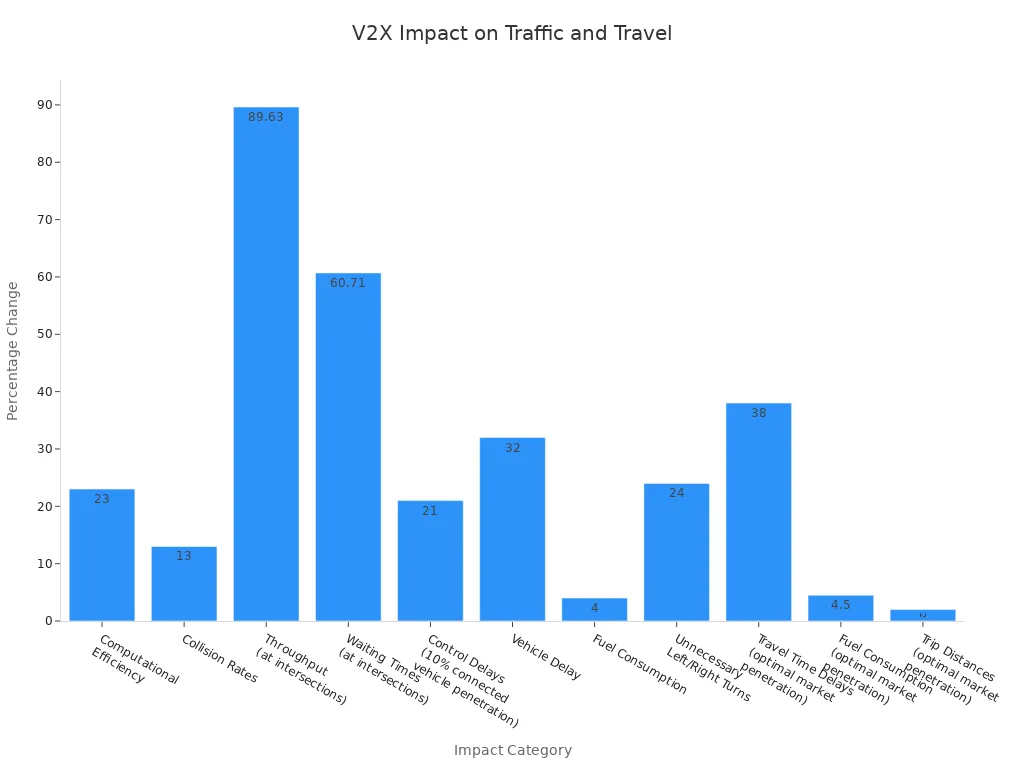
A special model helps with this. It mixes car routes with traffic light times. This model has shown less total travel time. It also makes things work better across the network. Better car-following models also help. They look at many cars ahead. These models make traffic steady. They reduce jams better. They work better than models. These models only use distance.
Good for the Earth
V2X tech helps the environment. It cuts bad fumes. It uses less gas. When traffic moves well, cars stop and start less. This uses less gas. It also puts out fewer bad things into the air. The table above shows 4% less gas used. When most cars use it, gas use drops by 4.5%. This makes transport greener.
Help for Self-Driving Cars
V2X components are key for self-driving cars. They give important data. They allow talking. Self-driving cars use their own sensors. But V2X adds more awareness. It lets self-driving cars “see” further. They can get warnings about hidden dangers. They can get info about traffic ahead. This data helps self-driving cars make better choices. It makes them work safer and better. V2X communication lets these cars talk to each other. They can also talk to road systems. This is key for a future. A future with fully self-driving transport.
V2X Challenges and Future Outlook
Current Challenges
V2X tech has problems. Standardization is a big one. Different places use different ways to talk. This makes it hard for cars to talk. Security is another worry. V2X shares private data. Keeping it safe from bad guys is key. Privacy is also a problem. People worry about being watched. Building new roads costs a lot. This slows down V2X use.
Future of V2X and Smart Transportation
V2X has a bright future. This is true even with problems. It will get better. More people will use it. Costs will go down. Rules will be clearer. V2X will work with new tech. 5G will make it faster. Artificial intelligence (AI) will help. It will process V2X data.
AI and machine learning (ML) are important. They make V2X communication better. They help with networks. They guess traffic. They make things safer. They help cars drive together. Some AI methods are:
Deep Learning (DL)
Reinforcement Learning (RL)
Generative Learning (GL)
Federated Learning (FL)
AI helps manage resources. It helps manage traffic. It makes things safer. Generative Learning is very good. It can make 6G-V2X systems smarter. These changes will help V2X Components. They will be a main part of smart cities. They will make travel safer. They will make it work better.
V2X tech is very important. It helps smart transportation. It lets things talk fast. This system makes roads safer. It helps traffic move better. It cuts down on jams. V2X also helps the environment. It supports self-driving cars. These V2X Components change city travel. They make transport smarter. They make it safer. They make it work better. This tech changes how people travel. It changes how they use roads.
FAQ
What is V2X communication?
V2X means Vehicle-to-Everything. It lets cars talk to things. This includes other cars. It includes road parts. It includes people walking. It includes the internet. It shares info fast. This makes travel safer. It makes travel work better.
How do On-Board Units (OBUs) and Roadside Units (RSUs) work?
OBUs are in cars. They gather car data. They send it out. RSUs are on roads. They help cars talk. They help cars talk to the internet. They make a connected system. This helps smart travel.
How does V2X technology improve road safety?
V2X tech makes roads safer. It gives warnings fast. It tells drivers about dangers. This stops crashes. It warns about people. It warns about work zones. This keeps everyone safe.
What is the main difference between DSRC and C-V2X?
DSRC uses a special radio. It talks directly. It works for short range. C-V2X uses cell networks. This includes 4G and 5G. It can talk directly. It can use the network. It works over longer areas. Many think C-V2X is better for later.
What challenges does V2X technology face?
V2X tech has problems. Making rules the same is hard. Keeping data safe is key. People worry about privacy. Building all the new parts costs a lot. This makes it hard to use everywhere.