
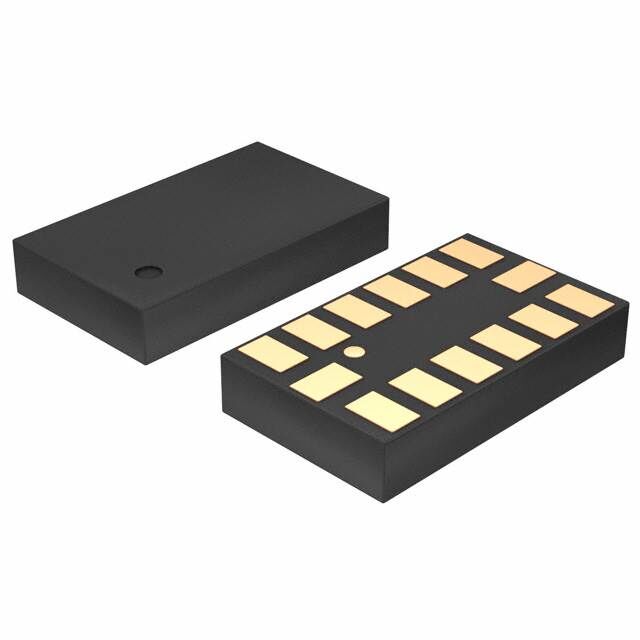
In industrial environments, vibration monitoring plays a critical role in maintaining equipment health and ensuring operational efficiency. However, noise often interferes with accurate data collection. Measurement noise can distort readings, making it harder to identify potential issues. Factors like environmental conditions, such as wind direction, and irrelevant noise data further complicate the process. These challenges not only affect compliance with regulations but also reduce the reliability of your monitoring systems.
The ADXL345BCCZ sensor offers a robust solution to these problems. Its advanced design minimizes noise while delivering precise vibration data. By integrating this sensor into your systems, you can achieve more reliable monitoring and improve overall efficiency.
Key Takeaways
Noise in factories can mess up vibration data, causing wrong readings and higher repair costs.
The ADXL345BCCZ sensor helps track vibrations better by cutting noise and making data more accurate.
Use differential readings to remove shared noise and get clearer signals.
Keep machines balanced and switch to quieter tools to lower vibrations and work better.
Use good shielding and organize cables to keep systems safe from electric interference.
Understanding Noise in Industrial Vibration Monitoring
Common Sources of Measurement Noise
Industrial environments often present various challenges when it comes to vibration monitoring. One of the most significant issues is measurement noise, which can distort the accuracy of your data. Understanding the common sources of noise is the first step in addressing these challenges.
Electromagnetic interference (EMI)
Electromagnetic interference, or EMI, is a frequent cause of electrical noise in industrial settings. It arises from capacitive coupling due to time-varying electric fields, such as those emitted by nearby relays. Inductive coupling from magnetic fields generated by motors or machinery also contributes to EMI. Even radiative coupling from distant sources, like fluorescent lighting, can introduce unwanted noise into your vibration data.
Mechanical vibrations from nearby equipment
In many facilities, machinery operates in close proximity. This setup often leads to mechanical vibrations transferring from one piece of equipment to another. These vibrations can interfere with your monitoring systems, making it harder to isolate the specific signals you need to measure.
Ground loops in electrical systems
Ground loops occur when connected terminals have different ground potentials. This difference creates offset errors, which can significantly impact the accuracy of your vibration readings. Identifying and isolating these loops is crucial to minimizing industrial noise problems.
Impact of Noise on Vibration Data Accuracy
Noise in your vibration monitoring system can lead to several issues that affect both data quality and operational efficiency.
False readings and misinterpretation
Measurement noise can cause false readings, leading you to misinterpret the condition of your equipment. This misinterpretation may result in unnecessary maintenance or overlooked issues.
Reduced reliability of predictive maintenance
Predictive maintenance relies on accurate data to identify potential failures before they occur. Noise reduces the reliability of this approach, making it harder to predict and prevent equipment breakdowns.
Increased downtime and maintenance costs
When noise affects your vibration data, it can lead to incorrect decisions about maintenance schedules. This inaccuracy often results in increased downtime and higher maintenance costs, impacting your overall productivity.
Noise Control Techniques for Industrial Vibration Monitoring
Using Differential Readings
How differential readings reduce common-mode noise
Differential readings are a powerful tool for reducing common-mode noise in vibration monitoring systems. By measuring the difference between two signals, you can effectively cancel out noise that is common to both. This approach works because common-mode noise, such as electromagnetic interference, affects both signals equally. When you subtract one signal from the other, the noise cancels out, leaving only the true vibration data. This method enhances the accuracy of your measurements and minimizes the impact of external noise sources.
Practical implementation in vibration monitoring
To implement differential readings, you need sensors capable of differential output, like the ADXL345BCCZ. Connect the sensor’s differential outputs to a differential amplifier or data acquisition system. Ensure proper grounding and shielding to maximize noise reduction. This setup is particularly effective in environments with high electromagnetic interference, where accurate vibration data is critical for predictive maintenance.
Breaking Ground Loops
Identifying and isolating ground loops
Ground loops often occur when multiple devices share a common ground but have different ground potentials. These loops introduce unwanted noise into your vibration monitoring system. To identify ground loops, use a multimeter to measure voltage differences between ground points. Once identified, isolate the loop by breaking the electrical connection causing the potential difference.
Tools and methods for breaking ground loops
You can use isolation transformers or optocouplers to break ground loops. Isolation transformers separate the electrical connection while maintaining signal integrity. Optocouplers use light to transmit signals, eliminating electrical continuity. Both methods are effective in reducing noise and improving the reliability of your vibration control system.
Leveraging Current Loops
Benefits of current loops in noise suppression
Current loops offer several advantages for noise suppression in industrial environments:
They are immune to most electrical noise and voltage drops over long cable lengths.
They simplify field wiring by combining power and measurement signals in the same leads.
Isolation barriers prevent signal degradation by isolating the current loop from ground paths.
These features make current loops an excellent choice for noise control solutions in vibration monitoring.
Examples of current loop applications
Current loops are widely used in industrial transducers for sensing pressure, flow, and proximity. These applications are common in process-monitoring systems. The 4-20 mA current loop is particularly effective for transmitting sensor data over long distances in noisy environments. Isolation barriers in these setups ensure accurate measurements by preventing signal degradation. By integrating current loops, you can achieve reliable vibration damping and noise reduction in your monitoring systems.
Shielding and Proper Cabling
Importance of shielding in reducing EMI
Shielding plays a vital role in reducing electromagnetic interference (EMI) in industrial environments. Proper shielding ensures that your vibration monitoring system maintains noise immunity, even in high-interference areas. You can achieve this by using shielded twisted-pair (STP) or coaxial cables, which minimize EMI effectively. Grounding the shields at a single point prevents ground loops, further enhancing noise reduction. Separating power and signal cables also reduces cross-interference. In environments with extreme noise, double-shielded cables provide additional protection. Maintaining physical separation between cables and components ensures consistent performance. Designing EMI-free zones for sensitive equipment keeps them away from high-power devices, improving overall noise control.
Best practices for cable management
Proper cable management is essential for maintaining the reliability of your vibration monitoring system. Start by organizing cables to avoid tangling and overlapping. Use cable trays or conduits to keep them secure and separated. Labeling cables helps you identify them quickly during maintenance. Avoid running signal cables parallel to power lines, as this can introduce noise. Instead, cross them at right angles when necessary. Regularly inspect cables for wear and tear to ensure optimal performance. These practices not only improve noise immunity but also extend the lifespan of your monitoring setup.
Filtering and Signal Processing
Types of filters for noise suppression
Filters are indispensable for noise suppression in vibration monitoring systems. Low-pass filters block high-frequency noise while allowing low-frequency signals to pass through. High-pass filters do the opposite, eliminating low-frequency noise. Band-pass filters target specific frequency ranges, making them ideal for isolating vibration signals. Notch filters remove narrow frequency bands, effectively eliminating persistent noise sources. Choosing the right filter depends on the type of noise and the frequency range of your vibration data.
Digital signal processing techniques
Digital signal processing (DSP) techniques enhance noise control by analyzing and modifying vibration data in real time. Algorithms like Fast Fourier Transform (FFT) identify noise frequencies, enabling precise filtering. Adaptive filtering adjusts to changing noise conditions, maintaining data accuracy. DSP also supports advanced techniques like wavelet transforms, which separate noise from useful signals. By integrating DSP into your monitoring system, you can achieve superior noise reduction and improve the reliability of your vibration data.
Structural Noise Control Techniques
Using vibration dampers and isolators
Vibration dampers and isolators are effective tools for reducing noise in industrial settings. Vibration isolation pads, such as rubber-bonded cork pads, minimize the transmission of vibrations into structures. These pads decouple machinery from supporting structures, preventing vibrations from radiating as noise. Applying damping techniques, like constrained layer damping, dissipates vibration energy in machine components. This approach reduces noise levels and enhances the stability of your equipment. Ensure rigid connections across isolation pads are avoided, as they can compromise their effectiveness.
Installing sound barriers and acoustic blankets
Sound barriers and acoustic blankets provide additional noise control by absorbing and blocking sound waves. Install sound barriers around noisy machinery to contain noise within a specific area. Acoustic blankets, made from sound-absorbing materials, wrap around equipment to reduce noise emissions. These solutions are particularly useful in environments where vibration isolation pads alone are insufficient. Combining these methods with other noise control techniques ensures a quieter and more efficient industrial workspace.
Machinery Maintenance and Upgrades
Regular balancing of machinery
Balancing your machinery is essential for effective vibration control. When machines operate with unbalanced components, they generate excessive vibrations. These vibrations not only increase noise levels but also accelerate wear and tear. Regular balancing ensures that all rotating parts distribute weight evenly, reducing unnecessary strain on the equipment.
You can achieve this by inspecting and adjusting the balance of rotating components like fans, motors, and shafts. Using precision tools, such as laser alignment systems, helps you identify imbalances quickly. Addressing these issues promptly minimizes vibration and noise, improving the overall performance of your machinery. Additionally, balanced machinery operates more efficiently, leading to energy savings and extended equipment life.
Upgrading to low-noise equipment
Investing in low-noise equipment is another effective strategy for machine noise control. Modern machinery often incorporates advanced designs that focus on noise reduction. For example, manufacturers use quieter motors, improved bearings, and vibration-damping materials to minimize sound production. Upgrading to such equipment significantly enhances noise control in your facility.
When selecting new machinery, prioritize models designed for low-noise operation. Look for features like built-in vibration dampers or noise-insulated housings. These upgrades not only reduce noise but also improve the reliability of your operations. By replacing outdated equipment, you can achieve better noise reduction and create a safer, more comfortable working environment.
Tip: Regular maintenance complements these upgrades. Lubricating moving parts reduces friction, while replacing worn components ensures smooth operation. These practices lower noise levels and extend the lifespan of your machinery.
By combining regular balancing with strategic upgrades, you can effectively control vibration and noise in your industrial setup. These measures not only enhance operational efficiency but also contribute to a quieter and more productive workspace.
Role of ADXL345BCCZ in Noise Suppression
Key Features of the ADXL345BCCZ Sensor
High sensitivity and accuracy
The ADXL345BCCZ sensor offers exceptional sensitivity and accuracy, making it ideal for precise vibration monitoring. Its high sensitivity ensures that even the smallest vibrations are detected, while its accuracy minimizes errors in data collection. This combination allows you to capture reliable vibration data, even in challenging industrial environments.
Built-in noise filtering capabilities
The ADXL345BCCZ sensor incorporates advanced noise filtering capabilities, which significantly enhance its performance. These features include algorithms designed to reduce unwanted signals and improve data clarity. The sensor also provides precise control over its parameters, enabling you to fine-tune it for specific applications. Below is a table summarizing its key features:
Feature Description |
|---|
Advanced algorithms for noise reduction and filtering |
Precise control of sensor parameters and calibration |
High-speed interfaces for data transfer and processing |
Fine-grained event detection and processing capabilities |
Multi-axis measurement capabilities for complex applications |
Robust fault tolerance and error correction mechanisms |
Advantages of Using ADXL345BCCZ in Industrial Applications
Enhanced reliability in harsh environments
The ADXL345BCCZ sensor is built to withstand harsh industrial conditions. Its wide operating temperature range (-40°C to 85°C) ensures consistent performance in extreme environments. The sensor’s low power consumption (140μA nominal supply current) makes it energy-efficient, while its compact package (14-VFLGA, 3mm depth, 5mm length) allows for easy integration into various systems. The table below highlights its advantages:
Feature | Description |
|---|---|
Operating Temperature Range | -40°C to 85°C |
Low Power Consumption | Nominal supply current: 140μA |
High Sensitivity | 256 LSB/g for ±2g, 32 LSB/g for ±16g |
Adjustable Bandwidth | Customizable performance |
Compact Package | 14-VFLGA, 3mm depth, 5mm length |
Compatibility with noise control techniques
The ADXL345BCCZ sensor seamlessly integrates with various noise control techniques. Its multi-axis measurement capabilities allow you to monitor complex vibration patterns effectively. Additionally, its robust fault tolerance ensures reliable operation, even in noisy environments. These features make it a versatile choice for industrial applications.
How the ADXL345BCCZ Simplifies Noise Suppression
Real-time data processing
The ADXL345BCCZ sensor simplifies noise suppression through real-time data processing. Its integrated memory management system includes a 32-level FIFO buffer, which stores data efficiently. This reduces the need for constant processor activity, enabling faster and more accurate noise reduction. Special sensing functions, such as activity and inactivity detection, further enhance its ability to filter out irrelevant motion data.
Integration with existing monitoring systems
The ADXL345BCCZ sensor integrates effortlessly with your existing monitoring systems. Its high-speed interfaces ensure quick data transfer, while its customizable parameters allow you to adapt it to your specific needs. This compatibility reduces the complexity of implementing noise control measures, saving you time and resources.
Tip: Pair the ADXL345BCCZ with the ADuCM360 microcontroller for a complete “Sensor + Signal Chain” solution. This combination enhances noise suppression and improves overall system performance.
Case Studies and Practical Examples
Real-World Applications of Noise Control Techniques
Example 1: Reducing EMI in a manufacturing plant
Electromagnetic interference (EMI) often disrupts vibration monitoring systems in manufacturing plants. By implementing engineering controls, such as shielding and proper cabling, you can achieve substantial noise reductions quickly and at a low cost. Monitoring sound and noise exposure in these environments ensures worker safety and improves productivity. Accurate measurement of noise levels identifies hazardous areas, allowing you to implement effective control measures. These steps not only protect workers but also maintain compliance with safety standards.
Noise Control Technique | Application | Benefits |
|---|---|---|
Engineering Controls | Solutions to common industrial noise problems | Substantial noise reductions at low cost |
Sustainable Practices | Alternatives to traditional palliatives | Self-financing and environmentally friendly |
Uncontrolled noise can negatively impact worker concentration and hinder communication. These issues often lead to decreased productivity and efficiency. By addressing EMI effectively, you can create a safer and more efficient workspace.
Example 2: Breaking ground loops in a power generation facility
Ground loops frequently cause noise in power generation facilities. Identifying and isolating these loops is essential for accurate vibration monitoring. Using isolation transformers or optocouplers eliminates electrical continuity, reducing noise significantly. These tools ensure reliable data collection, enabling you to make informed decisions about equipment maintenance. Breaking ground loops not only enhances monitoring accuracy but also minimizes downtime and operational disruptions.
Success Stories with the ADXL345BCCZ Sensor
Improved data accuracy in a chemical processing plant
A chemical processing plant faced challenges with inaccurate vibration data due to high levels of noise. By integrating the ADXL345BCCZ sensor, the facility achieved precise vibration monitoring. The sensor’s built-in noise filtering capabilities eliminated unwanted signals, improving data clarity. This enhancement allowed the plant to optimize its predictive maintenance strategies, reducing equipment failures and increasing operational efficiency.
Reduced downtime in a mining operation
In a mining operation, frequent equipment breakdowns caused significant downtime. The ADXL345BCCZ sensor provided a solution by delivering real-time vibration data with high sensitivity and accuracy. Its robust design ensured reliable performance in the harsh mining environment. By leveraging the sensor’s capabilities, the operation reduced downtime and maintenance costs, leading to improved productivity and profitability.
Noise suppression is vital for maintaining accurate industrial vibration monitoring. It ensures compliance with regulations, supports real-time adjustments, and leverages advanced technologies like AI filtering tools to enhance monitoring effectiveness. You can implement actionable techniques such as vibration isolation and acoustic screens to achieve significant noise reduction. The ADXL345BCCZ sensor simplifies this process with its built-in noise filtering and real-time data processing capabilities. By adopting these strategies, you can improve operational efficiency, reduce downtime, and ensure reliable monitoring in challenging environments.
FAQ
What makes the ADXL345BCCZ sensor suitable for industrial environments?
The ADXL345BCCZ sensor offers high sensitivity, built-in noise filtering, and a robust design. Its wide operating temperature range and low power consumption make it reliable in harsh industrial conditions. You can easily integrate it into existing systems for precise vibration monitoring.
How does the ADXL345BCCZ help reduce noise in vibration monitoring?
The sensor features advanced algorithms for noise filtering and real-time data processing. Its differential output and multi-axis measurement capabilities allow you to minimize common-mode noise and capture accurate vibration data. These features simplify noise suppression in challenging environments.
Can the ADXL345BCCZ work with other devices in the ADI ecosystem?
Yes, the ADXL345BCCZ pairs seamlessly with devices like the ADuCM360 microcontroller. This combination creates a complete “Sensor + Signal Chain” solution, enhancing noise suppression and improving overall system performance. You can use this setup for efficient and reliable monitoring.
What are the key advantages of using the ADXL345BCCZ over other sensors?
The ADXL345BCCZ stands out for its low power consumption, compact design, and industrial-grade reliability. It offers superior noise filtering and high sensitivity compared to competitors like the MPU6050 or BMI160. These features make it ideal for demanding industrial applications.
Where can I find resources to implement the ADXL345BCCZ in my system?
You can access datasheets, reference designs, and application notes online. For example, the ADXL345BCCZ-Datasheet.pdf provides detailed specifications. You can also explore Arduino or ESP32 example codes to simplify integration into your vibration monitoring setup.
Tip: Visit the ADI website for additional resources and support.
See Also
Unveiling ADI’s ADXRS453BRGZ: A Marvel in Motion Sensing
Harnessing Signal Control Through AD9850BRSZ-REEL Innovations
Uncovering the Low Noise Voltage Reference of ADR225HRZN
Investigating ADXL357BEZ: The Efficient Low Power Accelerometer