Choosing a high-efficiency synchronous buck converter, such as the TPS563201DDCR, is crucial in industrial power supply design. These converters are essential for meeting the demands of automation and renewable energy applications. For example, industries rely on them to power smart factories and implement cutting-edge technologies. They also play a vital role in solar and wind energy systems by managing power effectively.
Industrial environments often face challenging conditions, including high temperatures and heavy workloads. Modern solutions like the TPS563201DDCR address these challenges with ease. This high-efficiency synchronous buck converter operates with up to 93% efficiency in stepdown mode, outperforming older designs. Its ability to handle diverse power requirements makes it an excellent choice for demanding industrial settings.
Incorporating advanced components like the TPS563201DDCR into industrial power supply design enhances efficiency, reduces energy waste, and improves overall system performance.
Key Takeaways
Pick energy-saving buck converters like TPS563201DDCR for better performance.
Check voltage and current ratings to match your system’s needs.
Look at efficiency for both light and heavy loads to save energy.
Focus on heat control features to avoid overheating in tough conditions.
Weigh initial costs against future savings by choosing good-quality parts.
Understanding Synchronous Buck Converters
What is a synchronous buck converter?
A synchronous buck converter lowers DC voltage efficiently. It uses a design that swaps the diode for a second MOSFET. This change reduces energy loss by cutting voltage drop. It works well for systems needing high output currents. This design saves energy and boosts performance. However, it needs careful control to prevent problems. One issue is shoot-through, where both MOSFETs turn on at once. This can harm the circuit.
Advantages of synchronous buck converters in industrial applications
Synchronous buck converters have many benefits for industries. They waste less energy, which is great for heavy workloads. These converters also stay cooler, making them reliable in tough conditions. They use fewer parts, saving space in small designs. Their ability to handle high currents makes them perfect for factory systems, motor controls, and IoT devices.
Here are some main benefits:
Less energy loss than non-synchronous designs.
Better stability in hard-working systems.
Smaller size, ideal for tight spaces.
Key differences between synchronous and non-synchronous buck converters
Synchronous and non-synchronous converters work differently. Synchronous ones use a second MOSFET instead of a diode. This boosts efficiency for high-performance tasks. Non-synchronous converters are simpler and cheaper but lose more energy. They waste power because of diode conduction.
Feature | Synchronous Buck Converter | Non-Synchronous Buck Converter |
|---|---|---|
Energy Loss | Lower | Higher |
Space Needed | Smaller | Larger |
Parts Count | Fewer | More |
Efficiency | Higher | Lower |
Cost | Higher | Lower |
Design Complexity | Higher | Lower |
In factories, synchronous converters are better at cutting energy loss. They improve efficiency and are great for high-performance systems.
Key Selection Criteria for High-Efficiency Synchronous Buck Converters
Voltage and current ratings for industrial applications
When picking a dc-dc converter, check its voltage and current limits. These limits show if it can handle your system’s power needs. Industrial systems often need high currents and wide voltage ranges. This supports devices like motors, automation tools, and point-of-load systems. Picking the right ratings keeps your system stable and protects parts from damage.
For example, industrial buck converters usually work with input voltages of 3 V to 36 V. This range helps them lower voltage for different devices. Converters with higher current limits, like 3 A or more, are great for heavy equipment. Always match the converter’s voltage and current to your system’s needs for the best results.
Efficiency considerations at light and heavy loads
Efficiency is very important in dc-dc converters, especially in industries. Saving energy and managing heat are top priorities. A good converter works well with both light and heavy loads. Light load efficiency is key for low-power devices like IoT tools. Heavy load efficiency ensures strong power for demanding tasks like motor control.
For instance, a high-efficiency converter can reach 93% efficiency in step-down mode. This happens with a 6 V input, 5 V output, and 180 mA load. Even with light loads, it stays stable, with only a 50 mV output change when input changes. This keeps power steady and reduces waste. Choosing an efficient converter improves reliability and cuts costs.
Impact of switching frequency on performance and size
Switching frequency affects how well a converter works and its size. Higher frequencies let you use smaller parts like inductors and capacitors. This makes the converter smaller, which is great for tight spaces. But higher frequencies can also cause more heat and lower efficiency.
Most converters switch at tens of kilohertz to several megahertz. For example:
Higher frequencies boost efficiency and shrink component size.
Smaller parts make converters perfect for point-of-load systems.
Higher frequencies may create more heat, needing better cooling.
When choosing a converter, balance frequency, efficiency, and size. A well-made converter can perform well and stay compact. This makes it ideal for industrial power systems.
Thermal management and reliability in harsh environments.
Managing heat is very important for keeping synchronous buck converters reliable. High heat can harm parts, lower efficiency, and shorten system life. Industrial systems often work in tough places, so good heat control is needed to avoid problems.
Manufacturers test converters to ensure they work in extreme conditions. These tests mimic real-world challenges to check reliability. Below is a table of key testing methods:
Methodology | Description |
|---|---|
Highly Accelerated Life Testing (HALT) | Tests prototypes under tough conditions to find weak parts and check reliability under heat and electrical stress. |
Highly Accelerated Stress Screening (HASS) | A fast test to find hidden flaws by using extra stress, ensuring parts can handle harsh conditions. |
Thermal Stress Analysis | Shows how heat affects part life, proving why good heat control is needed in hot environments. |
Pick converters with strong heat control features like heat sinks, smart designs, and thermal shutdown. These features keep systems stable even in hot places. For example, the TPS563201DDCR has thermal shutdown to stay reliable during heavy use.
Tip: Always think about room temperature and cooling in your design. Good airflow and heat control can make your system last longer.
Cost considerations and trade-offs in industrial designs.
Cost is also important when picking a high-efficiency converter. Advanced synchronous buck converters work better but may cost more at first. You need to compare the upfront cost with long-term savings like better efficiency and less energy waste.
Here are some trade-offs to think about:
Electrical Performance Comparison: High-efficiency converters work better but need pricier parts.
Cost Analysis: Focus on main electronics, not extra parts like surge protectors.
Certification and EMC Compliance: Meeting rules can raise costs, especially for designs like DOB Buck.
Lifespan Considerations: Cheaper designs with certain parts may not last as long.
Thermal Management: Advanced designs handle heat well, cutting cooling costs.
Strategic Implications:
Simple designs cost less but are less efficient.
DOB Buck designs are efficient but cost more and are harder to make.
Buck driver designs skip optocouplers, saving money and boosting reliability.
Choose a converter that fits your needs, budget, and performance goals. For example, a synchronous buck converter may cost more upfront but saves money later with better efficiency and less energy use.
Note: Spending more on good parts now can lower repair costs and downtime later, making it a smart investment.
Role of High-Efficiency Buck Converters in Industrial Power Systems
Applications in distributed power systems
Distributed power systems need buck converters to work efficiently. These converters step down voltages for different parts of the system. For example, they can lower 24V to 5V or 3.3V. This is important for powering devices like sensors and microcontrollers. By saving energy, these converters improve performance and cut costs.
Efficiency standards like ENERGY STAR and 80 PLUS Titanium are important. Products meeting these standards waste less energy and stay cooler. This makes them popular choices for modern power systems. Picking converters that meet these rules is very important.
Use in motor control and automation systems
Motor control systems need steady and efficient power. Buck converters provide stable voltage even with changing loads. For example, the LT8618 works at 87% efficiency with a 28V input. It performs well even in tough conditions.
These converters also save energy at light loads. They stay efficient, even at low power, like 10 mA. Features like Burst Mode® reduce energy use when systems are idle. Using these converters makes motor systems last longer and work better.
Powering industrial IoT devices and sensors
IoT devices need small and efficient power solutions. Buck converters help by adjusting voltage and saving energy. Dynamic voltage scaling (DVS) changes voltage to save battery power. Low quiescent current reduces energy use when devices are idle.
Converters like the LMR16030PDDAR also protect against overheating and overvoltage. These features keep systems safe in harsh environments. They are perfect for small devices where space and heat control matter. Using these converters ensures reliable power for IoT systems.
Specific uses in industrial settings
High-efficiency buck converters are important in many industries. They lower voltage effectively, providing steady power for different systems. These converters are used in renewable energy setups and factory automation.
Renewable Energy Systems
Buck converters help manage power in solar and wind systems. They control voltage from changing sources like solar panels. This keeps connected devices working smoothly. A report shows how strong controllers with buck converters improve system stability and efficiency.
The study explains how a strong controller improves converter performance. It works well with changing DC sources like solar panels. Case studies show better stability and efficiency in different industrial setups.
Factory Automation
In smart factories, buck converters power motors, sensors, and controllers. Their small size and efficiency make them great for distributed power systems. They keep voltage steady, even when loads change. New materials and designs make them even better for tough tasks.
The report looks at the growing need for DC-DC converter chips.
It talks about new materials and designs that boost efficiency for industrial uses.
Industrial IoT Devices
Buck converters are key for IoT devices in tough places. They handle voltage changes and stop overheating. Features like low idle power and adjustable voltage save battery life. This makes them ideal for remote sensors and monitoring tools.
Using high-efficiency buck converters in your designs saves energy, boosts reliability, and improves system performance.
High-Efficiency Synchronous Buck Converter TPS563201DDCR in Industrial Power Supply Design
Overview of the TPS563201DDCR and its features
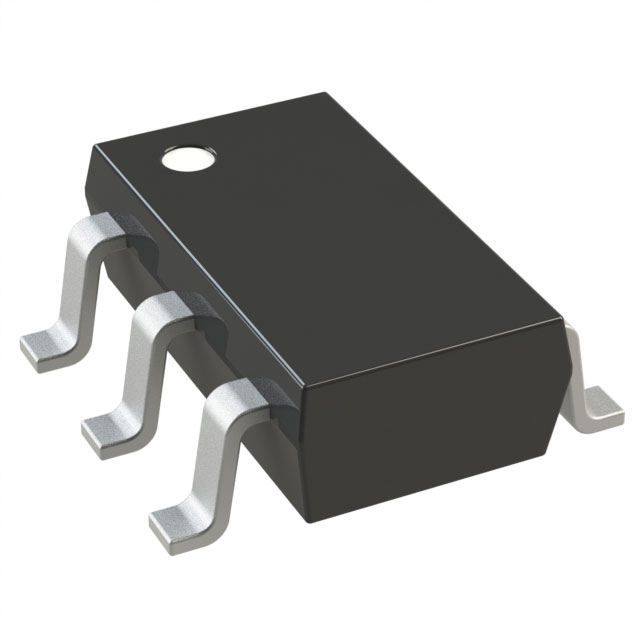
The TPS563201DDCR is a small, efficient buck converter. It is made for tough industrial power systems. Its advanced design makes it great for reliable power conversion. This converter works well even in harsh conditions.
One key feature is its built-in FETs, which are 95mΩ and 57mΩ. These parts help improve energy efficiency. The D-CAP2™ control system allows quick responses to load changes. It supports input voltages from 4.5V to 17V and output voltages from 0.76V to 7V. This makes it useful for many industrial tasks.
The TPS563201DDCR has different modes for various needs. It uses pulse-skip mode for light loads and continuous mode for steady power. Its 580kHz switching frequency allows smaller parts, saving space. Other features include a 1.0ms soft start, overcurrent protection, and thermal shutdown for safety.
Feature | Description |
|---|---|
Built-in FETs | 95mΩ and 57mΩ for better energy efficiency. |
Control System | D-CAP2™ for quick response to load changes. |
Input Voltage Range | 4.5V to 17V |
Output Voltage Range | 0.76V to 7V |
Operating Modes | Pulse-skip mode (TPS563201) or continuous mode (TPS563208). |
Switching Frequency | 580kHz |
Shutdown Current | Less than 20µA |
Feedback Voltage Accuracy | 2% at 25°C |
Startup from Prebiased Output Voltage | Yes |
Overcurrent Protection | Cycle-by-cycle limit and hiccup-mode protection. |
Undervoltage Protection | Non-latch UVP and thermal shutdown protections. |
Soft Start | Fixed soft start time of 1.0ms. |
Package | 6-pin 1.6mm × 2.9mm SOT (DDC) package. |
Temperature Range | Works from -40°C to 125°C junction temperature. |
Key specifications and performance benefits
The TPS563201DDCR has features that make it great for industrial use. It is efficient, small, and works reliably in many situations. It provides steady power while saving energy.
This converter stays efficient with both light and heavy loads. This is important for industrial systems with changing power needs. Its 2% feedback voltage accuracy ensures stable voltage, which is crucial for sensitive devices.
The TPS563201DDCR also handles heat well. Its shutdown current is less than 20µA, reducing heat when idle. The 1.0ms soft start prevents sudden power surges during startup. Its small 6-pin SOT package saves space, making it perfect for tight designs.
Advantages of using the TPS563201DDCR in industrial systems
Using the TPS563201DDCR in industrial systems has many benefits. It saves energy, which is important for renewable energy setups. It also provides steady voltage for different power needs.
This converter reduces energy loss better than older designs. It uses smaller parts like inductors and capacitors, saving space and cost. It works well in continuous conduction mode, which is ideal for steady power delivery.
Here are the main benefits:
Steady voltage for renewable energy systems.
High efficiency for better power transfer.
Reliable output for different power needs.
Lower energy loss and smaller parts.
Smooth operation in continuous conduction mode.
Adding the TPS563201DDCR to your design improves efficiency, reliability, and overall performance.
Examples of Advanced Buck Converter Technologies

Overview of leading manufacturers and technologies
Many companies lead in making advanced buck converters. Their designs improve efficiency and reliability in industrial systems.
Texas Instruments makes flexible buck converters for many uses. Their focus is on saving energy with smart solutions.
Analog Devices spends a lot on research to improve power control. Their advanced designs make their products stand out.
Infineon Technologies creates efficient power parts, great for cars and other uses.
ON Semiconductor and Maxim Integrated design converters that meet strict energy rules. Their work shows how competitive the industry is.
These companies set high standards for performance and reliability. Their technologies are perfect for industrial needs.
Comparison of key specifications and features
Modern buck converters have features that boost efficiency and stability. Comparing these helps you see their value for industries.
Feature | Benefit |
|---|---|
Lower switching losses | Improves energy efficiency |
Parallel-connected converter | Shares current better, improving stability |
Dynamic stability | Handles quick changes in power needs |
Fast dynamic behavior | Uses PID controllers for quick responses |
High efficiency | Ensures strong performance |
Control modes also affect how efficient converters are. Different modes work best for different tasks:
Control Mode | Efficiency Characteristics |
|---|---|
PFM (Pulse Frequency Modulation) | Saves energy with light loads |
PWM (Pulse Width Modulation) | Keeps voltage steady with heavy loads |
Hybrid Control | Combines the best of both modes |
These features and modes make converters reliable for various industrial tasks.
Benefits of integrating these technologies into industrial designs
Adding advanced buck converters to your designs has big benefits. They improve power delivery, save energy, and make systems more reliable.
For example, converters with Maximum Power Point Tracking adjust voltage for charging batteries. They reach 88.6% efficiency by adapting to changing conditions.
Feature | Description |
|---|---|
Maximum Power Point Tracking | Adjusts voltage for better battery charging |
Average Efficiency | Reaches 88.6% efficiency |
Nonlinear Voltage Tracking | Adapts to changing conditions |
Using these technologies improves system performance and lowers costs. They handle changing power needs and keep systems stable, making them essential for modern industries.
Picking the right buck converter is very important for industrial power systems. Efficient converters, like the TPS563201DDCR, save energy and work reliably. Look at key factors like efficiency, voltage range, and heat control to match your system’s needs.
Feature | Description |
|---|---|
Power Use | |
Efficiency | Stays efficient with light or heavy loads. |
Input Voltage Range | Handles wide input voltages and sudden changes. |
Component Count | Needs fewer and smaller extra parts to work. |
Try advanced options like the TPS563201DDCR to improve your designs and ensure they last in tough conditions.
FAQ
What does a synchronous buck converter do?
A synchronous buck converter lowers DC voltage for devices needing less power. It uses advanced MOSFETs instead of diodes to save energy. This makes it great for industrial systems that need to work well and last long.
How can you pick the right buck converter?
Look at important things like voltage range, current capacity, and efficiency. Make sure these match what your system needs. For industries, choose converters that are efficient and handle heat well.
Why is efficiency important in industrial systems?
Efficiency saves energy and reduces heat. This helps systems work better and costs less to run. High-efficiency converters, like the TPS563201DDCR, stay steady even with heavy use, making them perfect for industries.
What are the advantages of higher switching frequencies?
Higher switching frequencies let you use smaller parts like capacitors. This makes the converter smaller overall. But it can create more heat, so good cooling is needed. These converters are great for small industrial designs.
Can buck converters work in tough conditions?
Yes, many buck converters are built for harsh places. They have features like thermal shutdown and overcurrent protection. For example, the TPS563201DDCR works well from -40°C to 125°C, making it reliable for tough jobs.
Tip: Always check the temperature range and safety features when choosing a converter for tough environments.
See Also
A Comprehensive Guide to TPS54202DDCR Buck Chip Design
The Advantages of Using STM32F105RBT6 in Industrial Applications
Implementing TMS320F28034 for Enhanced Automation System Performance